

Nigeria’s warm climate makes it possible to grow a wide variety of beautiful houseplants throughout the year. However, the best indoor plants in Nigeria will only thrive when they receive the right balance of light, water, drainage, temperature, and humidity. Choosing species that suit your home’s conditions and following proper care practices are the keys to long-lasting, healthy growth.
A plant that grows beautifully in a Nigerian garden may struggle inside a dark room, while a plant that tolerates low light may suffer if placed directly behind a hot, sunny window.
This guide focuses on plants that can work well in typical Nigerian indoor environments, including homes, apartments and offices. It also explains how Nigeria’s different climatic conditions—from humid coastal cities such as Lagos and Port Harcourt to drier northern areas—can affect indoor plant care.
New to growing plants indoors? This indoor gardening for beginners guide covers plant selection, light, watering, soil, containers, feeding, repotting, and everyday care so you can build confidence and avoid common beginner mistakes.
What Are the Best Indoor Plants in Nigeria?
The following are names of the 25 best indoor plants that thrive in Nigeria and are practical choices for homes, apartments, and offices:
1. Snake Plant
2. ZZ Plant
3. Pothos
4. Spider Plant
5. Peace Lily
6. Chinese Evergreen
7. Rubber Plant
8. Dracaena
9. Parlor Palm
10. Areca Palm
11. Heartleaf Philodendron
12. Monstera
13. Peperomia
14. Cast Iron Plant
15. Prayer Plant
16. Hoya
17. Jade Plant
18. Aloe Vera
19. Haworthia
20. Ponytail Palm
21. Lucky Bamboo
22. Bird’s Nest Fern
23. Boston Fern
24. Moth Orchid
25. Anthurium
However, the “best” plant depends on your indoor conditions. A sunny Lagos apartment, an air-conditioned Abuja office and a dimly lit bedroom can provide very different growing environments.
The most important rule is simple: choose the plant according to the conditions you can provide, rather than choosing a plant first and trying to force it to adapt. Light is particularly important because plants need it for photosynthesis and healthy growth.
What Makes a Good Indoor Plant for a Nigerian Home?
Before buying a plant, look at five things:
Light: How much natural light reaches the room?
Temperature: Does the room become very hot or stay air-conditioned?
Humidity: Is the room naturally humid or relatively dry?
Watering: How quickly does the potting mix dry?
Drainage: Can excess water escape from the container?
These factors matter more than simply knowing that Nigeria has a warm climate.
Nigeria contains several climatic zones. Coastal areas such as Lagos and Port Harcourt are considerably more humid than many northern locations, while northern areas can experience much drier conditions, particularly during the dry season and harmattan.
Even within the same city, indoor conditions can differ dramatically. A room with large windows and strong afternoon sunlight may be much hotter and brighter than an interior bedroom with curtains drawn most of the day.
The Royal Horticultural Society similarly emphasizes light, humidity and temperature when selecting houseplants.
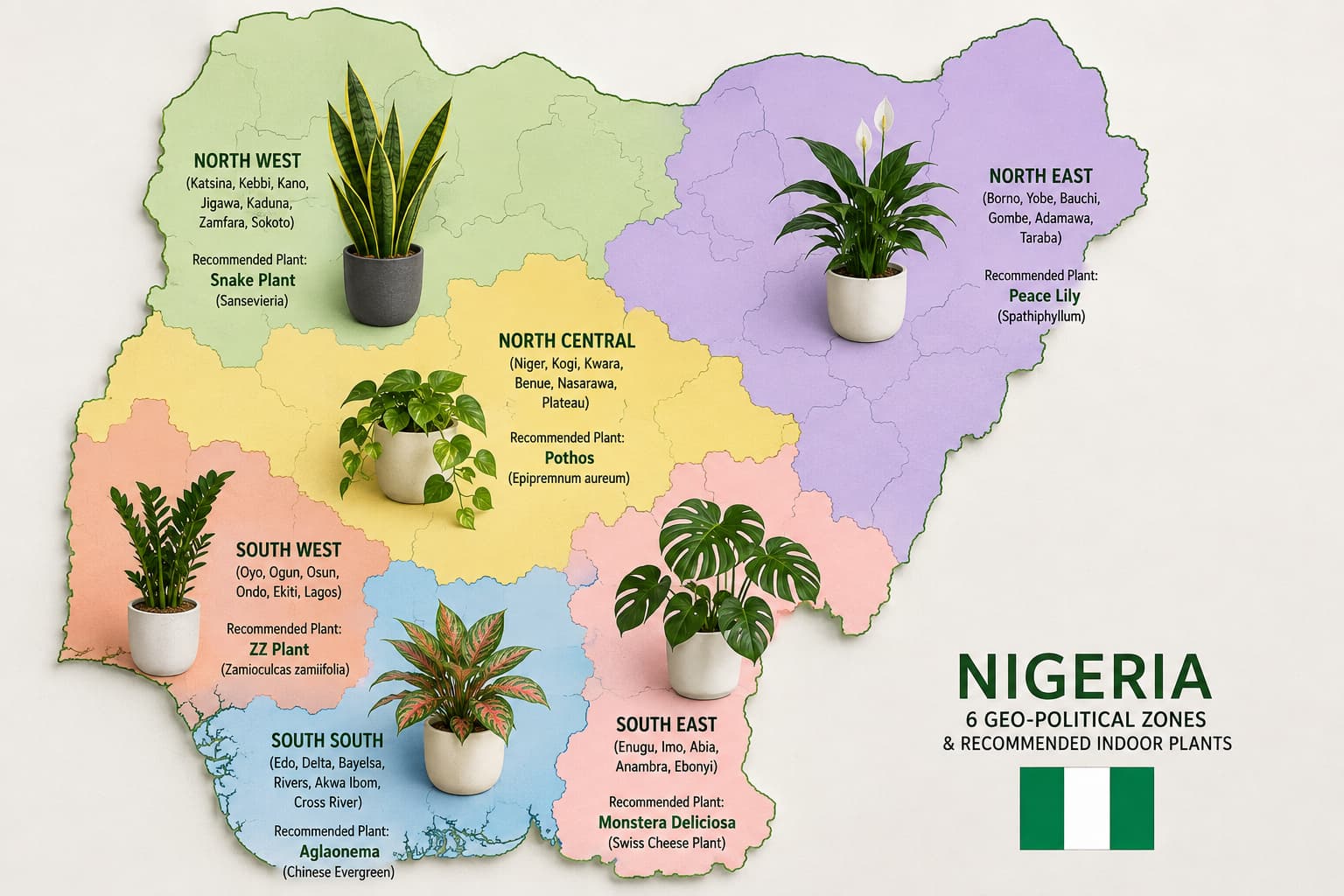
The 25 Best Indoor Plants in Nigeria
Now, let’s take a closer look at each of the 25 best indoor plants in Nigeria to help you choose the perfect one for your home or office.
1. Snake Plant (Dracaena trifasciata)
The snake plant is one of the easiest indoor plants to grow, making it a great choice for beginners. It can grow well in different indoor conditions and does not need to be watered often. In fact, it grows best when the soil is allowed to dry out before you water it again.
Its tall, upright leaves take up very little space, so it’s perfect for small rooms, apartments, and offices.
Best for: Bedrooms, living rooms, offices, and apartments
Light: Low to bright indirect light (it grows faster in brighter light)
Watering: Water only when the soil is mostly dry
Difficulty: Easy
Why it grows well indoors
The most common mistake people make with snake plants is watering them too often. Too much water can cause the roots to rot, especially if the pot does not have drainage holes.
To keep your snake plant healthy, use a pot with good drainage and let the soil dry out before watering again. With this simple care routine, your plant can stay healthy for many years.
2. ZZ Plant (Zamioculcas zamiifolia)
The ZZ plant is one of the best indoor plants for homes and offices with little natural light. It has thick roots that store water, so it can go for a while without being watered. This makes it a great choice if you sometimes forget to water your plants.
Best for: Offices, bedrooms, and low-light rooms
Light: Low to bright indirect light
Watering: Water only when the soil is dry
Difficulty: Easy
Looking for greenery that suits your bedroom? Discover best indoor plants for bedrooms that tolerate lower light and require manageable care, with practical suggestions for creating a healthier, more comfortable indoor space.
Why it grows well indoors
Although the ZZ plant can grow in low light, it still needs some light to stay healthy. A very dark room is not suitable for any houseplant. If your room has very little natural light, you may need to use a grow light.
3. Pothos (Epipremnum aureum)
Pothos is a beautiful trailing plant that looks great on shelves, plant stands, or in hanging baskets. It is easy to grow and can adapt to different indoor conditions, making it a favorite for beginners.
Best for: Shelves, living rooms, offices, and apartments
Light: Bright indirect light is best, but it also grows in lower light
Watering: Water when the top of the soil feels dry
Difficulty: Easy
Why it grows well indoors
If your pothos becomes long with only a few leaves, it probably needs more light—not more fertilizer. Moving it to a brighter spot with indirect sunlight will help it grow fuller and healthier.
4. Spider Plant (Chlorophytum comosum)
The spider plant is an easy-to-grow houseplant with long, arching leaves. As it matures, it produces small baby plants that hang from the main plant, making it even more attractive.
Best for: Bedrooms, living rooms, and hanging baskets
Light: Bright indirect light, but it also grows in moderate light
Watering: Water when the top of the soil starts to dry
Difficulty: Easy
Why it grows well indoors
Spider plants are fast-growing and need very little care. Keep them out of strong, direct sunlight, especially through a window, because it can burn their leaves.
5. Peace Lily (Spathiphyllum)
The peace lily is loved for its dark green leaves and beautiful white flowers. It adds a fresh, elegant look to any indoor space. Unlike some other houseplants, it likes the soil to stay slightly moist, so it needs regular watering.
Best for: Living rooms, bedrooms, and bathrooms with enough light
Light: Bright indirect light to moderate light
Watering: Keep the soil slightly moist, but don’t let it become soggy
Difficulty: Moderate
Why it grows well indoors
Peace lilies grow best when they are watered regularly. If the soil becomes too dry too often, the leaves may droop. Be careful not to overwater, as this can damage the roots.
Please understand that peace lilies are not safe if pets or young children chew on the leaves. If you have curious pets or small children, consider choosing a pet-friendly indoor plant instead.
6. Chinese Evergreen (Aglaonema spp.)
The Chinese evergreen is a beautiful indoor plant with colorful leaves. It is easy to care for and can grow well even in rooms that don’t get a lot of sunlight. Different varieties have different leaf colors, and the brighter ones usually need more light to keep their colors.
Best for: Bedrooms, living rooms, and offices
Light: Moderate to bright indirect light (green varieties can grow in lower light)
Watering: Water when the top of the soil feels dry
Difficulty: Easy to Moderate
Why it grows well indoors
Chinese evergreens can adapt to many indoor conditions, making them a great choice for beginners. If your plant has colorful or patterned leaves, place it in a brighter spot with indirect light to help the colors stay bright.
7. Rubber Plant (Ficus elastica)
The rubber plant is a popular houseplant with large, shiny leaves. It can grow quite tall indoors, making it a great choice if you want a plant that stands out.
Best for: Bright living rooms and large indoor spaces
Light: Bright indirect light
Watering: Water when the top of the soil feels dry
Difficulty: Moderate
Why it grows well indoors
The large leaves can collect dust over time, so gently wipe them with a soft, damp cloth to keep them clean and healthy. Avoid placing the plant right next to a very hot, sunny window because the leaves may get scorched.
8. Dracaena
Dracaena is a group of popular indoor plants known for their long, attractive leaves. Their neat shape makes them a great choice for homes, offices, and modern rooms.
Best for: Offices, living rooms, and room corners
Light: Moderate to bright indirect light (some types also grow well in lower light)
Watering: Water when the top part of the soil has dried out
Difficulty: Easy to Moderate
Why it grows well indoors
There are many different types of Dracaena, and each one may need slightly different care. If possible, find out which type you have so you can give it the best care.
9. Parlor Palm (Chamaedorea elegans)
The parlor palm brings a tropical feel to your home without needing lots of sunlight. It grows slowly and is easy to fit into small indoor spaces.
Best for: Living rooms, bedrooms, and offices
Light: Moderate to bright indirect light
Watering: Water before the soil becomes completely dry, but don’t let it stay soggy
Difficulty: Moderate
Why it grows well indoors
Parlor palms enjoy slightly moist soil, but too much water can damage their roots. Always use a pot with drainage holes so extra water can drain away.
10. Areca Palm (Dypsis lutescens)
The areca palm is a large, graceful plant that can brighten up living rooms, offices, and reception areas. Its feathery leaves give indoor spaces a fresh, tropical look.
Best for: Large living rooms, offices, and bright indoor spaces
Light: Bright indirect light
Watering: Water when the top of the soil starts to dry
Difficulty: Moderate
Why it grows well indoors
Although the areca palm is a tropical plant, it does not like sitting in wet soil. Use well-draining soil and a pot with drainage holes to help keep the roots healthy.
11. Heartleaf Philodendron (Philodendron hederaceum)
The heartleaf philodendron is a beautiful trailing plant that is easy to grow. It looks great on shelves, in hanging baskets, or climbing up a support if you want it to grow upward.
Best for: Apartments, bedrooms, offices, and shelves
Light: Moderate to bright indirect light
Watering: Water when the top of the soil feels dry
Difficulty: Easy
Why it grows well indoors
This plant grows well in most indoor spaces and needs very little care. You can let its vines hang down naturally or train them to climb a moss pole or trellis for a different look.
12. Monstera (Monstera deliciosa)
Monstera is a popular indoor plant with large, split leaves that give your home a tropical feel. It can grow quite large, so it needs enough space to spread.
Best for: Bright living rooms and spacious homes
Light: Bright indirect light
Watering: Water when the top of the soil feels dry
Difficulty: Moderate
Why it grows well indoors
Many people think monsteras can grow anywhere indoors, but they need plenty of bright, indirect light to stay healthy. If you place one in a dark corner, it may grow slowly and produce smaller leaves.
13. Peperomia
Peperomia is a small, attractive houseplant that comes in many different leaf shapes and colors. Its compact size makes it perfect for desks, shelves, and small rooms.
Best for: Apartments, desks, shelves, and bedrooms
Light: Bright indirect light
Watering: Water when the soil has partly dried out
Difficulty: Easy to Moderate
Why it grows well indoors
Because peperomias stay small, they are a great choice if you want greenery without taking up much space. They are also fairly easy to care for, making them suitable for beginners.
14. Cast Iron Plant (Aspidistra elatior)
The cast iron plant is one of the toughest indoor plants you can grow. It can handle lower light and is very forgiving if you forget to care for it now and then.
Best for: Low-light rooms and offices
Light: Low to moderate indirect light
Watering: Water when the top of the soil feels dry
Difficulty: Easy
Why it grows well indoors
This plant can grow in places where many other houseplants struggle. It grows slowly, so don’t worry if you don’t see new leaves right away. With patience and simple care, it will stay healthy for many years.
15. Prayer Plant (Maranta spp.)
The prayer plant is loved for its colorful leaves and the way they fold upward at night, as if in prayer. It adds beauty and interest to any indoor space.
Best for: Humid rooms with good indirect light
Light: Moderate to bright indirect light
Watering: Keep the soil slightly moist, but not soggy
Difficulty: Moderate
Why it grows well indoors
Prayer plants like higher humidity than many other houseplants. If the air in your home is very dry, especially in air-conditioned rooms, the leaf edges may turn brown. Increasing the humidity can help keep the leaves healthy and colorful.
16. Hoya
Hoya is a beautiful indoor plant with thick, waxy leaves. It can trail from a hanging basket or climb up a support. When it is healthy and mature, it may produce clusters of sweet-smelling flowers.
Best for: Bright rooms, shelves, and hanging baskets
Light: Bright indirect light
Watering: Water when the soil has partly dried out
Difficulty: Moderate
Care Tip: Hoyas grow slowly, so don’t worry if you don’t see new leaves right away. Give the plant plenty of bright, indirect light and avoid watering too often.
17. Jade Plant (Crassula ovata)
The jade plant is a small succulent with thick, fleshy leaves that store water. It is easy to care for and is perfect for sunny spots inside your home.
Best for: Bright windowsills and sunny rooms
Light: Bright light with some direct sunlight
Watering: Water only when the soil is completely dry
Difficulty: Easy
Best Care Tip: Too much water is the biggest problem for jade plants. Always use a pot with drainage holes and let the soil dry out before watering again.
18. Aloe Vera (Aloe Vera)
Aloe vera is a popular succulent that is both attractive and easy to grow. It loves bright light and needs very little water, making it a great choice for busy plant owners.
Best for: Bright windowsills and sunny rooms
Light: Bright light
Watering: Water only when the soil is completely dry
Difficulty: Easy
Simple Care Tip: If your aloe vera becomes pale, thin, or starts leaning toward the window, it probably needs more sunlight. Move it to a brighter location if possible.
For healthier, thriving houseplants, learn Aloe Vera Indoor Plant Care with proven tips for watering, sunlight, soil, repotting, common problems, and long-term growth.
19. Haworthia
Haworthia is a small succulent with thick, patterned leaves. Because it stays compact, it is perfect for desks, shelves, and small apartments.
Best for: Small spaces and bright windowsills
Light: Bright indirect light or a little direct sunlight
Watering: Water when the soil is dry
Difficulty: Easy
How To Care: Haworthias don’t need much space or frequent watering. They are an excellent choice if you’re looking for a low-maintenance indoor plant.
20. Ponytail Palm (Beaucarnea recurvata)
The ponytail palm is a unique indoor plant with a thick trunk that stores water and long, curly leaves that look like a ponytail. Even though its name says “palm,” it isn’t a true palm tree.
Best for: Bright rooms and sunny indoor spaces
Light: Bright light
Watering: Water when the soil is dry
Difficulty: Easy to Moderate
Care Tip: This plant needs plenty of light to stay healthy. Avoid placing it in a dark corner, as it grows best near a bright window.
21. Lucky Bamboo (Dracaena sanderiana)
Lucky bamboo is a popular indoor plant that is often grown in water, but it can also grow well in soil. It is easy to care for and adds a fresh, green look to homes and offices.
Best for: Desks, offices, and decorative indoor spaces
Light: Bright indirect light
Watering: If grown in soil, water when the top of the soil feels dry. If grown in water, keep the water clean and change it regularly.
Difficulty: Easy to Moderate
Caring Tip: Despite its name, lucky bamboo is not a true bamboo plant. Keep it out of direct sunlight, which can burn its leaves.
22. Bird’s Nest Fern (Asplenium nidus)
The bird’s nest fern is a beautiful tropical plant with wide, bright green leaves that grow from the center like a nest. It adds a fresh, natural look to indoor spaces.
Best for: Humid rooms and bright bathrooms
Light: Bright indirect or filtered light
Watering: Keep the soil slightly moist, but not soggy
Difficulty: Moderate
How To Care: When watering, pour water onto the soil instead of into the center of the plant. Too much water in the middle can cause the plant to rot.
23. Boston Fern (Nephrolepis exaltata)
The Boston fern is known for its long, graceful leaves that create a full, lush appearance. It makes an excellent indoor plant if you can provide enough moisture and humidity.
Best for: Humid homes, bathrooms, and shaded indoor spaces
Light: Bright indirect light
Watering: Keep the soil evenly moist, but don’t let it become waterlogged
Difficulty: Moderate
Caring: Boston ferns prefer humid air. If your home is very dry, especially when using air conditioning, mist the leaves occasionally or place the plant where humidity is higher.
24. Moth Orchid (Phalaenopsis spp.)
The moth orchid is one of the most popular flowering houseplants. Its long-lasting flowers come in many beautiful colors and can brighten up any room.
Best for: Bright indoor spaces
Light: Bright indirect light
Watering: Water thoroughly, then allow excess water to drain away before watering again
Difficulty: Moderate
Caring: Orchids should not be planted in ordinary garden soil. They grow best in a special orchid potting mix that allows air to reach their roots.
25. Anthurium
Anthurium is a colorful indoor plant with glossy green leaves and bright, heart-shaped flowers. It brings a tropical feel to homes and offices and can bloom for many weeks with proper care.
Best for: Bright living rooms and humid indoor spaces
Light: Bright indirect light
Watering: Water when the top of the soil begins to dry
Difficulty: Moderate
Caring: Anthuriums need plenty of bright, indirect light to grow well and produce flowers. Avoid placing them in dark corners, where they may stop blooming and grow more slowly.
Best Indoor Plants in Nigeria by Growing Conditions
The best indoor plant isn’t the same for every home. The right choice depends on your room’s light, available space, and how much time you can spend caring for your plants. Use this guide to find the plants that match your indoor growing conditions.
Remember that these are starting points rather than guarantees. Cultivar, pot size, soil composition, window exposure and room conditions can change how a plant behaves.
How Nigeria’s Climate Affects Indoor Plant Care
One of the biggest misconceptions about houseplants in Nigeria is that because Nigeria is generally warm, all indoor plants automatically have ideal conditions.
They don’t.
Nigeria spans several climatic zones. Coastal areas are generally wetter and more humid, while parts of northern Nigeria experience substantially drier conditions.
That creates different indoor-growing challenges.
Coastal Cities Such as Lagos and Port Harcourt
Higher ambient humidity can be helpful for humidity-loving tropical plants.
However, humid air does not mean you should water plants constantly.
A plant’s roots still need oxygen, and poorly drained soil that remains saturated can create serious root problems.
Drier Areas and Harmattan Conditions
During drier periods, indoor plants may lose water more rapidly, particularly if windows are open or the room is naturally dry.
Plants with thin leaves can show stress sooner than drought-adapted species.
This is one reason a plant such as a Boston fern can demand considerably more attention than a snake plant.
Air-Conditioned Rooms
Air conditioning changes the indoor environment regardless of the outdoor climate.
A plant may be sitting in Nigeria but experiencing a relatively cool, dry indoor microclimate.
Watch for:
• unusually dry leaf edges;
• slowed growth;
• soil drying faster or differently than expected;
• cold or strong air currents;
• sudden environmental changes.
Don’t place a sensitive plant directly in the path of an air-conditioner.
How to Choose Indoor Plants for a Nigerian Home
Before buying an indoor plant, take a few minutes to check your home’s growing conditions. This simple five-step guide will help you choose a plant that is more likely to stay healthy and thrive.
Step 1: Check the Light
Light is one of the most important things every plant needs. Before choosing a plant, look at the room during the brightest part of the day and ask yourself:
• Is the room bright enough to read without turning on a light?
• Does direct sunlight come through the window?
• If so, how many hours does it shine into the room?
• Will the plant be placed far from the window?
• Do curtains or blinds block most of the sunlight?
Keep in mind that light becomes much weaker the farther you move away from a window. A plant that grows well on a windowsill may not do as well several feet away.
Always remember to choose a plant whose light needs match the amount of natural light in your home.
Step 2: Consider the Temperature
Not every indoor plant enjoys intense heat, even if it is a tropical plant.
A sunny window can become much hotter than the rest of the room, especially during the hottest part of the day. Too much direct sunlight through glass can burn leaves or cause them to dry out.
Ensure to place most indoor plants where they receive bright, indirect light instead of strong afternoon sun.
Step 3: Check the Humidity
You don’t need to turn your home into a greenhouse to grow healthy indoor plants.
Instead, choose plants that suit the humidity levels in your home. If your home is naturally humid, tropical plants like ferns and peace lilies usually grow well. If your rooms are dry or you use air conditioning often, drought-tolerant plants such as snake plants, ZZ plants, jade plants, and succulents are usually easier to care for.
Be reminded that plants that match your home’s natural humidity are usually healthier and require less maintenance.
Step 4: Make Sure the Pot Has Good Drainage
Good drainage is just as important as proper watering.
Always choose a pot with drainage holes so extra water can flow out. Without good drainage, water can collect around the roots and cause root rot.
If you want to use a decorative pot without drainage holes, place the plant in a nursery pot with drainage holes and set it inside the decorative pot. After watering, pour away any excess water that collects at the bottom.
May I remind you that pot with good drainage helps prevent one of the most common causes of indoor plant problems—overwatering.
Step 5: Choose a Plant That Fits Your Lifestyle
The best indoor plant is one you can realistically care for.
If you travel often or sometimes forget to water your plants, choose low-maintenance varieties such as:
• Snake Plant
• ZZ Plant
• Jade Plant
• Aloe Vera
• Ponytail Palm
If you enjoy caring for plants and don’t mind watering them more often, you’ll have many more choices, including peace lilies, ferns, and orchids.
Remember, choosing a plant that matches your lifestyle makes it much easier to keep it healthy for years to come.
How to Care for Indoor Plants in Nigeria
Choosing the right plant is only the first step. To keep your indoor plants healthy and growing well, you need to provide the right care. The good news is that most houseplants thrive with a few simple habits.
1. Give Your Plants Enough Light
Light is one of the most important factors for healthy plant growth. If a plant doesn’t get enough light, it will often show clear signs that something is wrong.
Watch for these signs:
• Long, weak stems
• Large gaps between leaves
• Pale or yellowing leaves
• Slow growth
• Few or no flowers
• Leaves leaning toward the window
If your plant needs more light, move it closer to a bright window a little at a time. Avoid placing a shade-loving plant directly into hot, direct sunlight, as this can scorch the leaves.
If your home doesn’t receive enough natural light, a grow light can help your plants stay healthy.
2. Water Your Plants the Right Way
There isn’t a single watering schedule that works for every indoor plant. For example, watering every Sunday may be too much for some plants and too little for others.
How often you should water depends on:
• The type of plant
• Pot size
• Potting mix
• Temperature
• Amount of light
• Humidity
• Time of year
Plants in bright, warm rooms usually need water more often than plants growing in cooler or shadier areas.
Before watering, check the soil with your finger. If the top layer feels dry, many houseplants are ready for water.
Overwatering is one of the most common indoor plant-care mistakes, read how to water indoor plants properly.
3. Use the Right Potting Mix
Healthy roots need more than just water—they also need air.
A good potting mix should:
• Hold enough moisture
• Drain excess water easily
• Allow air to reach the roots
• Support healthy plant growth
Different plants need different types of soil. For example, a snake plant or aloe vera needs a fast-draining mix, while a Boston fern prefers a mix that holds more moisture.
Avoid filling indoor pots with ordinary garden soil, which can become too heavy and drain poorly.
When roots become crowded or the growing medium breaks down, repotting may be necessary. Follow this guide on how to repot indoor plants safely while minimizing root damage and helping your plant settle into its new container.
4. Fertilize Wisely
Indoor plants need nutrients, but giving them too much fertilizer can do more harm than good.
Too much fertilizer can:
• Burn the roots
• Damage the leaves
• Cause salt to build up in the soil
Most indoor plants only need fertilizer during their active growing season, and the amount depends on the type of plant.
Want healthier growth and stronger foliage? Learn how to fertilize indoor plants correctly, including when to feed, how much fertilizer to use, and common mistakes that can damage roots or cause excessive salt buildup.
5. Repot Only When Needed
Many people think a bigger pot is always better, but that’s not true.
A pot that is much larger than the root system holds more wet soil, which can increase the risk of root rot.
You may need to repot your plant if:
• Roots are growing out of the drainage holes
• The plant dries out very quickly
• The potting mix has broken down
• The plant has become too large for its pot
• The plant keeps tipping over
Yellow leaves, wilting, brown tips, slow growth, and leaf drop can have several causes. Learn about common indoor plant problems and how to identify the underlying issue before choosing the right solution.
6. Keep the Leaves Clean
Dust can collect on the leaves of large indoor plants, making them look dull and reducing the amount of light they receive.
Plants that often need cleaning include:
Monstera
Rubber Plant
Peace Lily
Anthurium
Wipe the leaves gently with a soft, damp cloth. While cleaning, check for yellow leaves, damaged stems, or signs of pests.
7. Check Your Plants for Pests
Even healthy indoor plants can sometimes attract pests. Finding them early makes them much easier to control.
Common indoor plant pests include:
• Mealybugs
• Spider mites
• Scale insects
• Aphids
• Fungus gnats
Before bringing home a new plant, inspect it carefully. If you notice pests on one of your plants, move it away from your other plants until the problem is under control.
Indoor plants aren’t immune to pests. Learn how to identify common indoor plant pests, understand the signs of infestation, and use practical control methods to protect your plants without making the problem worse.
Best Indoor Plants for Apartments in Nigeria
Living in an apartment doesn’t mean you can’t enjoy beautiful indoor plants. The key is choosing plants that match your space and lighting conditions.
Apartments often have:
• Limited space
• Uneven natural light
• Warm rooms
• Poor airflow
Best Plants for Small Apartments
If you have limited space, these compact plants are excellent choices:
• Peperomia
• Haworthia
• Snake Plant
• Small Pothos
Best Plants for Bright Apartments
If your apartment gets plenty of natural light, consider:
• Rubber Plant
• Monstera
• Hoya
• Jade Plant
• Aloe Vera
Best Plants for Low-Light Apartments
If your apartment doesn’t receive much sunlight, these plants are better suited:
• Snake Plant
• ZZ Plant
• Cast Iron Plant
• Chinese Evergreen (Aglaonema)
Remember, low light doesn’t mean no light. Every indoor plant needs some natural or artificial light to grow. If your apartment is very dark, place plants closer to a window or use a grow light to give them the light they need.
Best Indoor Plants for Offices in Nigeria
Offices can be challenging places for indoor plants because they often have artificial lighting, air conditioning, and limited natural sunlight. The best office plants are those that are easy to care for and can adapt to these conditions.
Choosing plants for an office requires considering light, air conditioning, space, and maintenance. Discover the
best indoor plants for offices that can tolerate typical workplace conditions while adding natural greenery with minimal care.
Some of the best choices include:
1. ZZ Plant
The ZZ plant is one of the easiest office plants to grow. It tolerates low light, needs very little water, and is perfect for busy workplaces.
2. Snake Plant
Snake plants are ideal if you sometimes forget to water your plants. They grow well in many office environments and require very little maintenance.
3. Dracaena
Dracaena adds height and style to office spaces with its upright leaves. It grows well in bright, indirect light but can also tolerate moderate light.
4. Chinese Evergreen (Aglaonema)
Chinese evergreens are known for their attractive foliage and ability to adapt to typical indoor office conditions. They are an excellent choice for desks, reception areas, and meeting rooms.
5. Pothos
Pothos is a versatile plant that looks great on shelves, cabinets, or hanging baskets. Its trailing vines add a touch of greenery while requiring very little care.
Want more options? Explore our complete guide to the 15 best indoor plants for offices that thrive with minimal care, where you’ll find more office-friendly plants along with detailed care tips.
Best Low-Light Indoor Plants in Nigeria
If your home doesn’t receive much natural sunlight, don’t worry. Many indoor plants can grow well in lower-light conditions. The key is choosing plants that naturally tolerate less light instead of those that need bright sunshine.
If your home doesn’t receive much natural sunlight, you still have plenty of options. Explore best low-light indoor plants for beginners that can tolerate lower-light conditions while remaining relatively easy to care for
If your room has limited natural light, these plants are excellent choices:
• Snake Plant
• ZZ Plant
• Cast Iron Plant
• Chinese Evergreen (Aglaonema)
• Pothos
• Some varieties of Dracaena
Keep in mind that low light doesn’t mean no light. Every plant needs some light to grow. In low-light rooms, plants usually grow more slowly and may produce fewer new leaves than they would in brighter conditions.
Want more options? Read our guide to the best low-light indoor plants for beginners for more easy-to-grow plants and detailed care tips.
Indoor Plants That Need Little Water
If you’re busy or sometimes forget to water your plants, choose species that can handle dry conditions between waterings.
Some of the best low-water indoor plants include:
• Snake Plant
• ZZ Plant
• Jade Plant
• Aloe Vera
• Haworthia
• Ponytail Palm
These plants store water in their leaves, stems, or roots, allowing them to survive longer without watering.
However, low-water doesn’t mean no water. They still need regular watering to stay healthy. The best approach is to let the soil dry out before watering again, rather than watering on a fixed schedule.
Choosing plants with low watering needs is a simple way to enjoy indoor gardening while spending less time on maintenance.
Indoor Plants and Pet Safety in Nigerian Homes
If you have cats or dogs at home, pet safety should be part of your decision when choosing an indoor plant. While many houseplants are safe, some can be harmful if pets chew or swallow their leaves or stems.
Sharing your home with cats or dogs requires careful plant selection. Discover pet-friendly indoor plants that can bring attractive greenery indoors while helping you reduce the risk associated with potentially harmful houseplants.
Before bringing a new plant home, always check whether it is safe for your pets. If you choose a plant that isn’t pet-friendly, place it well out of your pet’s reach and watch for any signs that they may be nibbling on it.
If you’re looking for safer options, explore our guides on pet-friendly indoor plants safe for cats and dogs and low-light indoor plants that are safe for cats. These articles can help you choose beautiful houseplants that are better suited for homes with curious pets.
The safest approach is to research every plant before buying it, especially if you have cats or dogs that like to chew on leaves. This simple step can help keep both your plants and your pets safe.
If you have cats and limited natural light, choosing the right plant matters. Explore low-light indoor plants safe for cats that can add greenery to your home while helping you make safer choices for curious pets.
Common Mistakes When Growing Indoor Plants in Nigeria
Even the easiest indoor plants can struggle if they aren’t cared for properly. Avoid these common mistakes to keep your plants healthy and thriving.
1. Giving Every Tropical Plant Direct Sunlight
Many people think all tropical plants love strong, direct sunlight. In reality, many tropical plants naturally grow under the shade of larger trees and prefer bright, indirect light.
Better approach: Learn how much light your plant needs before choosing a spot for it.
2. Watering on a Fixed Schedule
Watering every two or three days isn’t the best way to care for indoor plants. Different plants need different amounts of water, and factors like weather, light, and pot size can change how quickly the soil dries.
Better approach: Check the soil before watering. If the top layer feels dry, it’s usually time to water many common houseplants.
3. Using Pots Without Drainage Holes
A beautiful pot isn’t always the best choice if it doesn’t have drainage holes. Water can collect at the bottom, causing the roots to rot.
Better approach: Use a pot with drainage holes, or place a nursery pot inside a decorative container and empty any excess water after watering.
4. Placing Plants in Very Dark Corners
Many indoor plants can tolerate low light, but none can grow well in complete darkness. Over time, they may become weak, grow slowly, or lose their healthy color.
Better approach: Place your plants where they receive enough natural light, or use a grow light if your room is very dark.
5. Ignoring Indoor Humidity
Nigeria’s outdoor climate may be warm and humid, but the air inside your home can be very different. Air conditioners, fans, and closed windows can make indoor air much drier.
Better approach: Choose plants that match your home’s humidity levels or increase humidity for plants that need it.
6. Buying a Plant That’s Too Large
A large plant may look impressive in the store, but it also needs more space, light, and care to stay healthy.
Better approach: Start with a smaller plant that suits your home. It will adapt more easily and be simpler to care for.
7. Repotting Too Often
Repotting is important, but doing it too often can stress your plant and slow its growth.
Better approach: Only repot when the plant has outgrown its container, the roots are crowded, or the potting mix has broken down.
8. Treating Every Plant the Same
Not all indoor plants have the same care needs. A cactus, fern, orchid, and peace lily all need different amounts of light, water, and humidity.
Better approach: Identify your plant first, then follow the care instructions that are right for that specific species.
The easiest way to grow healthy indoor plants is to match each plant’s light, watering, and humidity needs to your home’s conditions. Choosing the right plant from the start is often more important than giving it extra care later.
A Simple Indoor Plant Decision Guide
Not sure which indoor plant to choose? Use this quick guide to find the best plant for your home and lifestyle.
My Room Has Little Natural Light
Choose plants that can grow well in lower-light conditions:
• Snake Plant
• ZZ Plant
• Cast Iron Plant
• Chinese Evergreen (Aglaonema)
I Often Forget to Water My Plants
These plants can go longer between waterings, making them perfect for busy people or beginners:
• Snake Plant
• ZZ Plant
• Jade Plant
• Aloe Vera
• Haworthia
My Room Gets Plenty of Bright Light
If your room receives lots of bright, indirect light, these plants are excellent choices:
• Rubber Plant
• Monstera
• Pothos
• Hoya
• Jade Plant
I Live in a Humid Area
Many tropical plants enjoy higher humidity and can thrive in these conditions:
• Peace Lily
• Anthurium
• Bird’s Nest Fern
• Boston Fern
You must remember that high humidity doesn’t replace proper lighting or good drainage. Your plants still need the right amount of light and well-draining soil to stay healthy.
I Have a Small Apartment
If space is limited, choose compact plants that fit easily on shelves, desks, or windowsills:
• Peperomia
• Haworthia
• Pothos
• Snake Plant
• Hoya
I Want a Large Statement Plant
If you’re looking for a plant that makes a bold impression, consider one of these larger indoor plants:
• Monstera
• Rubber Plant
• Areca Palm
• Parlor Palm
The best indoor plant isn’t necessarily the most popular one—it’s the one that matches your home’s lighting, available space, humidity, and the amount of care you can provide. Choosing the right plant from the start gives you the best chance of enjoying healthy, beautiful greenery for years to come.
Indoor Plant Care Checklist for Nigerian Homes
Use this simple checklist to give your indoor plants the best chance of growing healthy and strong.
Before You Buy a Plant
✔ Identify the plant correctly.
✔ Make sure you have enough space for its mature size.
✔ Check that your home provides the right amount of light.
✔ Choose a plant that matches your lifestyle and the time you can spend caring for it.
✔ If you have cats or dogs, confirm that the plant is safe for pets.
✔ Select a pot with drainage holes.
✔ Use a potting mix that suits your plant.
After You Bring It Home
✔ Place the plant where it will receive the right amount of light.
✔ Check the soil before watering—don’t water automatically.
✔ Watch for healthy new leaves and steady growth.
✔ Pay attention to how quickly the soil dries out.
✔ Inspect the plant regularly for pests or signs of disease.
✔ Avoid sudden changes in light, temperature, or humidity.
✔ Adjust your care routine as the seasons or indoor conditions change.
What Is the Best Indoor Plant in Nigeria for Beginners?
If you’re buying your first indoor plant, the Snake Plant is one of the best places to start. It’s easy to care for, needs very little water, and can grow well in a wide range of indoor lighting conditions.
However, there isn’t one perfect indoor plant for every Nigerian home. The best choice depends on your space, lighting, and lifestyle.
For bright rooms: Monstera or Rubber Plant
For small apartments: Peperomia or Haworthia
For humid rooms: Anthurium or Bird’s Nest Fern
For offices: ZZ Plant, Snake Plant, or Dracaena
For low-light spaces: Snake Plant, ZZ Plant, or Chinese Evergreen
The best indoor plant is the one that matches your home’s light, temperature, humidity, available space, and the amount of care you can provide. Choosing a plant that suits your environment will make it much easier to enjoy healthy, thriving indoor plants for years to come.
Frequently Asked Questions
1. What are the best indoor plants in Nigeria?
Some practical choices include Snake Plant, ZZ Plant, Pothos, Spider Plant, Aglaonema, Dracaena, Rubber Plant, Peace Lily and Heartleaf Philodendron. The best choice depends on your home’s light, humidity, temperature and watering conditions.
2. Can indoor plants grow well in Nigeria?
Yes. Many common houseplants can grow successfully in Nigerian homes when their requirements are met. However, Nigeria’s climate varies substantially by region, so indoor conditions in Lagos can differ considerably from those in Abuja or northern cities.
3. What is the easiest indoor plant to grow in Nigeria?
Snake Plant and ZZ Plant are among the easiest options for many beginners because they tolerate periods between waterings and can adapt to a range of indoor light conditions. They still require sufficient light and well-drained soil.
4. Which indoor plants need little water?
Snake Plant, ZZ Plant, Jade Plant, Aloe Vera, Haworthia and Ponytail Palm are good options for people who prefer plants with relatively low watering needs.
5. What are the best low-light indoor plants in Nigeria?
Snake Plant, ZZ Plant, Cast Iron Plant and some Aglaonema are among the better options for lower-light interiors. However, low-light plants still need enough light to photosynthesize and grow.
6. Can I grow indoor plants in an air-conditioned room?
Yes, but plant placement matters. Avoid putting plants directly in the path of cold, forceful air. Also monitor the growing medium and foliage because air-conditioned rooms can create a different temperature and humidity environment from the surrounding outdoor climate.
7. What soil is best for indoor plants in Nigeria?
There is no single soil mixture that is ideal for every houseplant. The best growing medium depends on the species. In general, indoor plants need a medium that provides appropriate moisture retention, drainage and air around the roots. Succulents, orchids and moisture-loving plants require different mixes.
8. How often should I water indoor plants in Nigeria?
There is no universal schedule. Check the plant’s specific requirements and the condition of the growing medium. Light, temperature, humidity, pot size and soil composition all affect how quickly a plant dries out.
9. Are indoor plants suitable for Nigerian apartments?
Yes. Compact plants such as Peperomia, Haworthia, Pothos and Snake Plant can work particularly well in apartments. The most important consideration is usually whether the apartment provides adequate natural light.
10. Which indoor plants are good for Nigerian offices?
Snake Plant, ZZ Plant, Dracaena, Aglaonema and Pothos are practical choices for many offices. However, check the office’s actual natural-light conditions before selecting a plant.
Conclusion
Growing indoor plants in Nigeria is not simply a matter of choosing tropical plants because the country has a warm climate.
Successful indoor gardening comes down to matching the plant to its environment.
Start with light. Then consider watering, drainage, humidity, temperature and available space. Once you understand those factors, choosing plants becomes much easier.
For beginners, Snake Plant, ZZ Plant, Pothos, Spider Plant and suitable Aglaonema are practical starting points. If your home is bright, you have a much wider range of choices, including Monstera, Rubber Plant, Hoya and several succulents.
And remember: an indoor plant does not need perfect conditions. It needs appropriate conditions for its species, consistent observation and care that responds to what the plant is actually experiencing.
That principle will serve you far better than following a fixed watering calendar or buying plants solely because they are advertised as “easy.”

About the Author: Emebu Blessing Oghale
Emebu Blessing Oghale is an expert SEO content writer, digital creator, and indoor gardening enthusiast based in Asaba, Nigeria. Combining horticultural principles with years of digital media experience, he founded Indoor Plant Guide to provide practical, beginner-friendly troubleshooting tips for plant parents across West Africa and beyond. When he isn’t cultivating tropical houseplants, he serves his local community as a pastor at Living Faith Church.

Hi Guider,
As a plant lover visiting this post, I found it very helpful and practical, especially for Nigerian homes. I love that it highlights plants that can actually thrive in our local climate and includes care tips. The guide makes choosing and caring for indoor plants much easier! 🌿🌱
Good to have you here Ashley, thanks for stopping by with an encouraging comment, keep visiting, and keep sharing.
Hello Bon aka Guider,
As someone who loves having plants around the home, I found this guide really helpful! I especially appreciate that it focuses on plants that can thrive in Nigerian homes and includes practical care tips. Definitely a useful resource for anyone looking to make their home greener and more beautiful. And the Nigerian map showing 6 Geo-political zones with their recommended indoor plant is something else honestly.
Hi Amina, feel great having you stop by with a comment, i appreciate, and hope to see more of you again.
Hello Bon,
This is such a useful and well-rounded guide, especially for anyone looking to bring more greenery into a Nigerian home. I really like that it goes beyond simply listing plants and explains how to care for them in our local climate. The variety is impressive too—there are options for different spaces, light conditions, and levels of gardening experience. Definitely a helpful resource for both beginners and experienced plant lovers. I’m saving this for future reference!
Happy to see you Fatima, thanks for stopping by with an opinion. Hope to seeing you again.